If you’ve ever stood on a construction site, watched a shipping container swing into place on a cargo ship, or seen a steel beam being hoisted to the top of a skyscraper, you’ve interacted with lifting components—the unsung heroes of heavy industry. As a lifting components supplier, I get asked this question all the time: what are these critical parts actually made of? It’s not a one-size-fits-all answer. The material depends on the load they need to move, the environment they operate in, and the safety standards they have to meet. Let me break down the most common materials we use at our facility, why they matter, and how we choose the right one for every project. Lifting Components
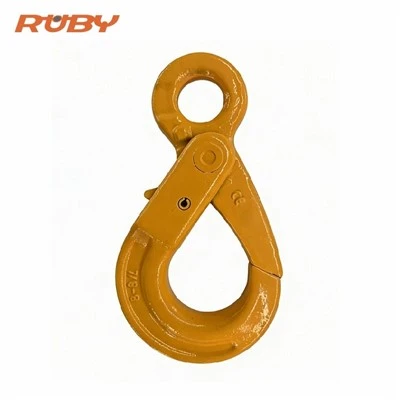
First, let’s start with the workhorse of lifting components: carbon steel. If you’ve ever handled a chain sling, a hook, or a shackle, chances are it’s made from carbon steel. Carbon steel is an alloy of iron and carbon, with small amounts of other elements added to tweak its properties. The key here is the carbon content: for lifting components, we usually stick to medium to high carbon grades, like 1045 or 4140. Why? Carbon steel has an unbeatable combination of strength, affordability, and machinability. It’s strong enough to handle heavy loads—shackles, for example, need to bend slightly under load without breaking, and carbon steel delivers that flexibility. It’s also easy to forge and weld, which is why it’s perfect for mass-producing parts like hooks and links.
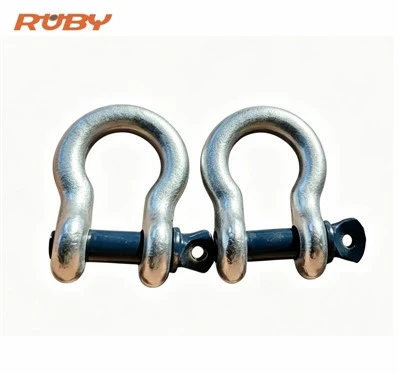
But carbon steel has a downside: it’s prone to corrosion. If a hook is left out in the rain, or a chain is used in a saltwater environment, it can rust quickly, which weakens the material. That’s why we use carbon steel for indoor or low-moisture applications—like warehouse hoists or construction sites where parts are stored in dry conditions. When we do use carbon steel for outdoor or corrosive environments, we add a protective coating: hot-dip galvanizing, powder coating, or paint. These layers act as a barrier between the steel and the elements, extending the part’s life. We always test these coatings before sending parts out; a galvanized shackle might look shiny, but if the coating is too thin, it’ll rust within months. So that’s a non-negotiable step for us.
Next, alloy steel. This is where we step up the performance for heavy-duty lifting. Alloy steel is carbon steel with additional elements like chromium, nickel, molybdenum, or vanadium added to enhance specific properties. For lifting, two alloy grades are standouts: 4130 and 4340. 4130 is a chromium-molybdenum alloy, which is strong, lightweight, and resistant to heat. That makes it ideal for parts used in high-temperature environments, like steel mills, where lifting components might be exposed to hot metal fumes. 4340, on the other hand, is a nickel-chromium-molybdenum alloy, which has exceptional tensile strength—meaning it can pull more weight without stretching or breaking. We use 4340 for high-stress parts like crane hooks and load chains that need to handle 100 tons or more.
Alloy steel is more expensive than carbon steel, but the trade-off is worth it for projects where safety isn’t an option. Unlike carbon steel, alloy steel is also more resistant to wear and tear. A chain made from alloy steel will last longer than one made from carbon steel in heavy-use applications, because it doesn’t stretch or wear down as quickly. We also heat-treat alloy steel parts after manufacturing—we quench them in water or oil, then temper them to balance strength and toughness. This process is critical; if we skip heat treatment, a 4340 hook might snap under load instead of bending, which is a catastrophic safety failure. Every alloy steel part we leave our facility goes through a hardness test to make sure it meets OSHA and ASME standards—we don’t cut corners here.
Now, let’s talk about stainless steel. You might think stainless steel is just for kitchens, but it’s a go-to for lifting components in harsh, corrosive environments. Stainless steel is an iron alloy with at least 10.5% chromium, which creates a thin, protective oxide layer on the surface that prevents rust. There are a few grades we use, but 304 and 316 are the most common for lifting. 304 is a chromium-nickel alloy, great for general corrosive environments like food processing plants (where lifting parts come into contact with cleaning chemicals) or pharmaceutical facilities (where cleanliness is key). 316 is a higher-grade stainless steel, with molybdenum added to resist saltwater and strong acids—so it’s perfect for marine applications, offshore oil rigs, or coastal construction sites.
Stainless steel is more expensive than both carbon and alloy steel, and it’s also less strong. That means we can’t use stainless steel for parts that need to handle extreme loads—we reserve it for where corrosion resistance is non-negotiable. For example, a lift hook for a cargo ship that carries containers through saltwater has to be stainless steel; if it rusts, it could fail mid-lift, endangering workers and cargo. We also have to be careful with how we machine and weld stainless steel; if we don’t use the right tools or filler metal, the protective oxide layer can break down, leading to corrosion. That’s why our team has specialized training for working with stainless steel—we’ve had to fix too many parts from other suppliers that were welded incorrectly and corroded within a year.
Wait, what about aluminum? You might not expect aluminum to be used for lifting components, but it has a niche role. Aluminum is lightweight, corrosion-resistant, and easy to machine. We use aluminum for small, high-precision lifting parts, like clamps used in aircraft maintenance or lifting devices for delicate electronics. The key here is that aluminum has a lower tensile strength than steel, so it can only handle small loads—usually under 500 pounds. You’d never use an aluminum shackle for a construction crane, but it’s perfect for lifting a laptop or a fragile circuit board in a factory. We also make aluminum chains for overhead lifting in clean rooms, where carbon steel would leave metal shavings or corrode. The downside? Aluminum is more expensive than carbon steel, and it’s softer, so it can scratch under heavy use. We only use it when the application specifically requires lightweight or non-corrosive parts.
Another material that’s gaining traction in lifting components is high-strength low-alloy (HSLA) steel. This is a type of steel that’s designed to be both strong and lightweight, without the extra cost of full alloy steel. HSLA steel has small amounts of niobium, vanadium, or titanium added, which make it 20-30% stronger than carbon steel, but still affordable. We use HSLA steel for parts like spreader beams, which are used to evenly distribute a heavy load between multiple lifting points. Spreader beams need to be strong enough to hold tons of weight, but light enough for workers to handle when not in use. HSLA steel fits that bill perfectly. It’s also more resistant to impact than carbon steel, so it’s ideal for parts that might get bumped around on a construction site.
Now, let’s get into why material selection matters as a lifting components supplier. I’ve seen too many projects go wrong because someone picked the wrong material. Last year, a construction company came to us with a set of carbon steel chains they’d bought from a discount supplier, and they were rusting so badly after six months that they had to replace them. They were using the chains in a coastal city, where salt air ate through the galvanized coating. We replaced them with 316 stainless steel chains, and they’re still going strong three years later. That’s the difference material selection makes. It’s not just about cost— it’s about safety. A lifting component that fails can kill someone, so every choice we make has to prioritize that.
We also have to consider standards. In the U.S., OSHA and ASME B30.20 set strict requirements for lifting components. For example, a shackle used to lift over 10 tons has to be made from alloy steel, and it has to pass a proof load test that’s 2 times the working load limit. We test every part we manufacture before it leaves our facility—no exceptions. We’ve had parts fail those tests, and we send them back to the shop to reheat-treat or reforge. It’s frustrating, but it’s non-negotiable. Our customers trust us to deliver parts that are safe, and we take that seriously.
So, when should you choose which material? Let’s break it down by use case. For general, low-load applications (like warehouse hoists, indoor rigging) where cost is a factor, carbon steel with a protective coating is your best bet. For high-load, high-stress applications (crane hooks, load chains, offshore rigging), alloy steel is the way to go. For corrosive environments (marine, food processing, coastal), stainless steel is a must. For small, lightweight, precision lifting (aircraft, electronics), aluminum works. And for parts that need a balance of strength and light weight, HSLA steel is perfect.
At the end of the day, every material has its place. As a lifting components supplier, our job isn’t just to sell parts—it’s to help our customers choose the right material for their specific needs. If you’re planning a project, whether it’s a construction build, a marine cargo lift, or a clean room operation, reach out to our team to discuss your requirements. We can help you select the right material, test it, and make sure it meets all safety standards. Don’t risk cutting corners on material quality—your crew and your cargo deserve the best.
Lifting Components References:
- ASME B30.20, “Below-the-Hook Lifting Devices,” American Society of Mechanical Engineers, 2023.
- OSHA 1926 Subpart CC, “Cranes and Derricks in Construction,” Occupational Safety and Health Administration, 2022.
- Davis, J.R., “Corrosion: Understanding the Basics,” ASM International, 2000.
- Kalpakjian, S., and S.R. Schmid, “Manufacturing Processes for Engineering Materials,” Pearson, 2014.
- Mott, R.L., “Machine Elements in Mechanical Design,” Pearson, 2018.
Hangzhou Ruby Imp. & Exp. Co., Ltd.
As one of the most experienced lifting components manufacturers and suppliers in China, we offer a wide range of products with superior quality. We warmly welcome you to wholesale custom made lifting components at competitive price from our factory.
Address: Taoyuan Industrial Park, Puyang Town, Xiaoshan, Hangzhou, Zhejiang, China.
E-mail: Sales5@z2lifting.com
WebSite: https://www.rubylifting.com/
