As a long – standing supplier of Gantry Machining Centers, I’ve witnessed firsthand the pivotal role that the Automatic Tool Changer (ATC) plays in the operation of these high – performance machines. Over the years, the ATC has transformed from a simple accessory to an indispensable component, revolutionizing the efficiency and versatility of gantry machining centers. Gantry Machining Center
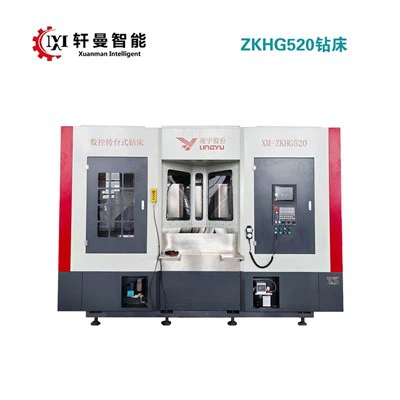
1. Enhancing Productivity
The most obvious and significant function of the ATC in a Gantry Machining Center is to boost productivity. In traditional machining operations, changing tools was a time – consuming manual process. Operators had to stop the machine, remove the used tool, and then carefully install a new one. This not only wasted a considerable amount of production time but also increased the margin of error introduced by human factors.
With an ATC, the tool – changing process is automated. The ATC can store multiple tools in a magazine or a chain – type structure, and it is programmed to select and exchange the required tools rapidly. For example, in a complex machining job that involves multiple operations such as milling, drilling, and tapping, the ATC can switch between different tools in a matter of seconds. This continuous and seamless tool – changing ability allows the gantry machining center to run uninterrupted, significantly reducing idle time and increasing the overall production output.
Let’s take a real – world scenario as an example. If a manufacturer is producing large – scale mechanical parts, a gantry machining center with an efficient ATC can complete the entire machining process from roughing to finishing without the need for manual tool changes. This means that the production time for each part can be reduced by up to a third compared to using a machine without an ATC. As a result, manufacturers can produce more parts in less time, meeting market demands more effectively and improving their competitiveness in the industry.
2. Improving Machining Accuracy
Another crucial function of the ATC is to enhance machining accuracy. Manual tool changes are prone to errors, such as incorrect tool installation or misalignment. These errors can lead to dimensional inaccuracies in the machined parts, which may result in product defects and increased scrap rates.
The ATC in a gantry machining center is designed with high – precision mechanisms. When changing tools, it ensures that the new tool is installed accurately and precisely in the spindle. The positioning of the tool is controlled by advanced sensors and servomotors, which can achieve extremely high levels of repeatability. This means that each time a tool is changed, it is placed in the exact same position relative to the workpiece, reducing the variability in machining operations.
For instance, in the aerospace industry, where the tolerance requirements for parts are extremely strict, the use of an ATC in gantry machining centers is essential. A small deviation in the position of the tool can lead to a failed part that does not meet the required specifications. The ATC eliminates the potential errors associated with manual tool changes, ensuring that the gantry machining center can produce parts with consistent high – quality and accuracy.
3. Increasing Machining Flexibility
In today’s manufacturing environment, flexibility is key. Customers often require a wide variety of custom – made products, and manufacturers need to be able to quickly adapt to these changing demands. The ATC in a gantry machining center provides this much – needed flexibility.
An ATC can hold a large number of different types of tools, such as end mills, ball mills, drills, reamers, and taps. This allows the gantry machining center to perform a diverse range of machining operations on a single workpiece without the need for re – fixturing or moving the part to a different machine. For example, a manufacturer can use a gantry machining center with an ATC to produce a complex automotive component that requires both milling and drilling operations. The ATC can automatically select and change the appropriate tools, enabling the machine to perform these different operations in sequence.
Moreover, the ATC can be easily reprogrammed to accommodate different machining requirements. If a new product design requires a different set of tools, the operator can simply modify the machining program to instruct the ATC to select the necessary tools. This quick and easy reprogramming ability allows manufacturers to switch between different production jobs rapidly, reducing setup times and increasing the overall efficiency of the manufacturing process.
4. Reducing Labor Costs
Labor cost is a significant factor in manufacturing. Manual tool – changing operations not only require skilled operators but also consume a large amount of their time. By automating the tool – changing process, the ATC in a gantry machining center can significantly reduce labor costs.
With an ATC, one operator can oversee multiple gantry machining centers simultaneously. Since the ATC takes care of the tool – changing tasks, the operator can focus on other important aspects of the machining process, such as monitoring the machine’s performance, inspecting the parts, and adjusting the machining parameters. This means that fewer operators are needed to run the production line, resulting in substantial savings in labor costs.
In addition, the use of an ATC reduces the physical strain on the operators. Manual tool changes can be physically demanding, especially when dealing with large and heavy tools. By eliminating the need for manual tool changes, the ATC improves the working conditions for the operators, reducing the risk of injuries and fatigue.
5. Maintaining Consistent Machining Quality
Consistency is crucial in mass production. The ATC in a gantry machining center helps to maintain a consistent level of machining quality across all the parts produced. Since the tool – changing process is automated and precisely controlled, each part is machined using the same set of tools and under the same machining conditions.
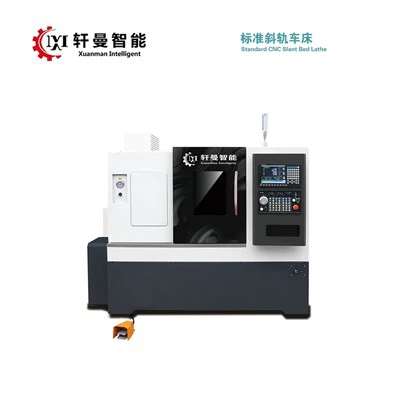
This consistency is particularly important in industries such as electronics and medical device manufacturing, where the quality and performance of the products need to be highly uniform. The ATC ensures that every part produced by the gantry machining center meets the same high – quality standards, reducing the number of defective products and improving customer satisfaction.
Face Grinding Machine As the market demands for high – quality, efficient, and flexible manufacturing solutions continue to grow, the importance of the ATC in gantry machining centers will only become more pronounced. If you are in the market for a gantry machining center that can provide you with these benefits, we are here to help. Our team of experts can provide you with detailed information about our products and solutions, and assist you in finding the perfect gantry machining center with an advanced ATC for your specific manufacturing needs. We welcome you to contact us to start a procurement discussion and find out how our products can enhance your manufacturing capabilities.
References
- "CNC Machining Handbook", a comprehensive guide on computer – numerical – control machining processes and technologies.
- "Advanced Machine Tool Design", which covers the latest developments in the design of various machine tools, including gantry machining centers.
- Industry research reports on the performance and functions of different automatic tool changer systems in machining centers.
Jiangsu Xuanman Intelligent Equipment Co., Ltd.
We’re well-known as one of the leading gantry machining center manufacturers in China, featured by quality products and low price. Please rest assured to buy discount gantry machining center made in China here from our factory. We also accept customized orders.
Address: No. 1-1, Weier Road, Jieji Equipment Manufacturing Industrial Park, Sihong County, Suqian City, Jiangsu Province, China
E-mail: jsxmzn@163.com
WebSite: https://www.xm-cnc.com/
