Hey guys, let’s cut through the noise and talk about something you probably don’t think about every day, but definitely should: air purification. I’m not a college lab guy, just a bloke who’s been supplying brushless blowers for over a decade, and I get more questions than I can count about how these things actually tie into clean air—specifically, their air purification ability. If you’ve ever wondered whether that quiet, efficient blower you’ve got your eye on (or already have) is actually pulling its weight when it comes to scrubbing the gunk out of the air, this post’s for you. No overly jargon-heavy stuff, just real talk, data I’ve seen first-hand, and some stories from customers who’ve been in the same boat as you. Brushless Blower
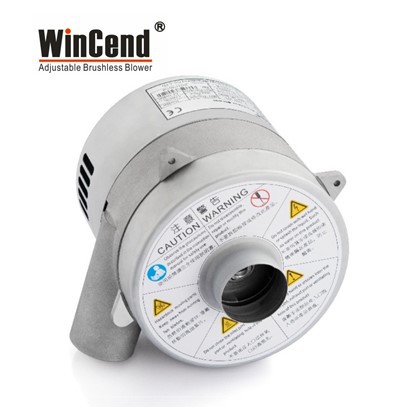
First, let’s get one thing straight: brushless blowers aren’t standalone air purifiers. If you stick one in a box and call it a day, it’ll move air, sure, but it won’t actually filter out particles or kill bacteria. That’s a common mix-up, and I get why people get confused—you see “blower” and “air purification” in the same sentence and assume it’s a one-stop shop. But here’s the secret sauce: they’re the workhorse behind almost every effective air purification system out there, from the fancy whole-home HVAC units to the industrial dust collectors that keep factories running without making workers cough into mugs. They don’t do the cleaning themselves, but they’re the reason the cleaning even happens. Let’s break down why that matters so much compared to the old brushed blowers everyone used 10, 15 years ago.
Brushed blowers are the legacy players, right? You know the ones—they have little carbon brushes that rub against the motor shaft to make it spin. But those brushes wear out, create friction, and generate a ton of heat. That heat isn’t just bad for the blower’s lifespan (you’d be shocked how many old systems I’ve seen where the blower died in 2 years because of heat-related burnout) — it’s actually bad for air quality too. Wait, hear me out: the extra friction from those brushes also creates tiny metal particles that get pulled into the air stream. If that blower is part of an air purification system, you’re adding more gunk right back into the air you’re trying to clean. Gross, right? Brushless blowers? No brushes. No friction. Way less heat. No extra metal particles. That’s a huge baseline win for air quality before you even add filters or other purification tech.
Now, let’s get into the actual air purification part, because that’s what you clicked here for. Air purification systems work in three basic steps: pull in dirty air, process it to remove contaminants, push out clean air. The blower is the engine that drives all three. If your blower is weak, slow, or inefficient, your whole purification system is garbage. Think about it: if you have a HEPA filter that can trap 99.97% of 0.3 micron particles, but your blower can’t push enough air through that filter in an hour, then half the air in your room is just sitting there, dirty. That’s where brushless blowers shine because of their two big superpowers: airflow consistency and energy efficiency, both of which directly boost purification performance.
Let’s talk airflow consistency first. Brushed blowers’ performance drops off hard as they age—like, by year 3, they might be pushing 20-30% less air than they did new, because the brushes are worn down. Brushless blowers, on the other hand, use a magnetic field to spin the motor shaft, no contact, so their airflow stays almost exactly the same for 10, 15, even 20 years. For an air purification system, that means the filter is always getting the same volume of air pushed through it. I had a customer last year who runs a 10,000 sq ft warehouse that processes pharmaceutical ingredients—they had an old brushed blower system that was only pulling 2 air changes per hour (ACH) in their clean room, which is the minimum required for pharmaceutical processing. They switched to our brushless blowers, and within a week, their ACH jumped to 5. That meant their filters were processing 2.5x more air, trapping more particulates, and they passed their OSHA and FDA audits with zero issues. No more downtime, no more fine because of dirty air. That’s the difference a consistent blower makes.
Energy efficiency is another big one, and it ties directly to how much air you can actually purify. Brushless blowers use 30-50% less energy than equivalent brushed models, right? So if you’re running an air purification system 24/7 (which most industrial and commercial systems are, and even a lot of residential whole-home systems now), you’re not wasting energy just to spin the blower. That means you can afford to run the blower at a higher speed, longer, without blowing your electricity bill out of the water. A lot of people ask me, “Why would I want a blower that uses less energy for air purification? If it’s not using energy, it can’t move as much air.” But that’s not how brushless works—because the magnetic motor is so much more efficient, it moves more air per watt than brushed. Let’s do a quick real-world example: a standard 1HP brushed blower might move 1,000 CFM (cubic feet per minute) and use 1,000 watts. A 1HP brushless blower? It moves 1,400 CFM on the same 1,000 watts. That’s 40% more air, same energy cost. So you’re pushing more dirty air through your filters, getting it cleaned faster, without paying more to do it. That’s a no-brainer for anyone serious about air purification.
But wait, purification isn’t just about particles, right? What about volatile organic compounds (VOCs), mold, bacteria, even viruses? Can a brushless blower help with that too? The short answer is yes, but it’s not direct—again, it’s the blower making the rest of the purification system work better. A lot of advanced air purifiers use technologies like UV-C light, photocatalytic oxidation (PCO), or activated carbon filters to break down or trap VOCs and microbes. But those technologies work best when air flows through them at a specific, consistent speed. Too fast, and the air doesn’t spend enough time near the UV light or carbon to get cleaned. Too slow, and you’re wasting blower power and filter space. Brushless blowers let you dial in that speed perfectly, because their magnetic motor can adjust airflow way more precisely than brushed. For example, a restaurant we supply blowers to had issues with fryer grease fumes (super high VOCs) lingering in their dining room after closing. They installed a system with our brushless blowers, set to push air through activated carbon filters at 300 CFM—exactly the sweet spot for the carbon to adsorb the grease particles and VOCs. Before, with their old brushed blower, they could only push 200 CFM at that speed, so fumes would stick around for 2 hours after cleaning. Now, the fumes are gone in 20 minutes, and they haven’t had to replace the carbon filters as often because the air is moving through evenly, no spots where dirty air is bypassing the filter.
Now, let’s address the elephant in the room: are brushless blowers better for purification in small spaces too, not just big warehouses and restaurants? Absolutely. I’ve got a few residential customers who build custom whole-home air purification systems, not the cheap box units from the store. They use our small brushless blowers in ductwork to pull air through HEPA filters in every room. A lot of those customers have kids with asthma or allergies, so they care about every particle being trapped. One customer in Austin, TX, had a problem with oak pollen (super bad there this time of year) getting into his house. He had a standard HVAC system with a cheap blower that only filtered like 10% of the pollen. He swapped out the blower in his air handler for our small brushless model, and the pollen count in his bedroom dropped from 120 particles per cubic meter to less than 5, according to the air quality monitor he uses. That’s not a lab test— that’s his monitor, sitting on his nightstand, logging every hour. The difference was that the brushless blower pushed enough air through his MERV 13 filter (better than the standard filter most HVACs use) to actually catch the pollen, instead of just blowing around the air that was already in the system.
Of course, I don’t want you to walk away thinking brushless blowers solve every air quality problem. They’re a component, not a silver bullet. If you use a cheap, thin HEPA filter with a brushless blower, you’re still going to get dirty air. And if you run your blower at full speed 24/7 with no filters, you’re just moving dirty air around, not cleaning it. The key is pairing the right brushless blower (size, airflow, precision) with the right purification tech for your space. For commercial spaces, that might be MERV 14 filters plus UV-C light. For industrial settings, it’s HEPA filters plus carbon beds. For residential whole-home, maybe a smart filter that adjusts based on air quality, with a variable-speed brushless blower that matches.
Another thing I hear all the time: “Aren’t brushless blowers more expensive up front?” Yeah, a little. But here’s the thing about air purification systems—most people don’t want to replace their blower every 2 years, right? With brushed blowers, you’re not just replacing the blower, sometimes you’re replacing filters because they’re not working as well, and you’re paying more in electricity. I’ve had customers who switched to our brushless blowers and saved 30% a year on their energy bills, and the blower itself lasts 10x longer than the old brushed ones. One customer’s brushless blower is still running strong after 12 years—his old one died after 18 months. So the upfront cost pays for itself in less than 2 years, and you get better air quality the whole time.
Let’s also talk about noise, because that’s a big one for a lot of people. If you’re running a purification system in a bedroom, a quiet blower is non-negotiable. Brushed blowers make a racket—all that friction, the brushes scraping against the shaft, that’s a constant whine. Brushless blowers? No friction, so they run much quieter. A lot of people say they can’t even hear our brushless blowers running when they’re installed in an air handler or a ceiling duct. For residential systems, that’s huge—no more white noise that’s too loud, no more waking up to a whirring blower. And quieter doesn’t mean less powerful, either—we’ve got small brushless blowers that move 500 CFM and are quieter than a whisper, perfect for small apartment air purifiers.
Wait, let’s make sure we’re not missing any downsides? I’ve been doing this long enough to know there are two minor ones, and I’m honest about them because I don’t want to sell you something that doesn’t fit. First, if you need a super custom, very specific airflow profile for a weird space, you have to pick the right blower size. But that’s why we help customers size them—we’ll ask you about your space, how much air you need to move, what kind of purification tech you’re using, and we’ll point you to the exact model that works, no guesswork. Second, they are a little more complex to repair if something does go wrong, but since they last so long, most people never have to deal with that. And parts are easy to source, so it’s not like you’re stuck waiting weeks for a replacement.
So let’s wrap this up, because I know you’re probably ready to stop reading and check your own system. The takeaway here is: brushless blowers don’t purify air on their own, but they’re the most effective, long-lasting, energy-efficient way to move air through a purification system, which means they directly improve air quality way more than old brushed blowers. Whether you’re a small business owner trying to keep your customers healthy, a warehouse manager dealing with dust or fumes, or a homeowner with allergies or asthma, swapping out your old blower for a brushless model is one of the most impactful upgrades you can make for better air quality—no fancy new purifier required, just a better engine for the system you already have.

If you’re curious about which blower would work for your space, or you want to ask more specific questions about how they pair with HEPA, carbon, UV, or any other purification tech, hit us up to talk through your needs. We work with everyone from residential homeowners to large industrial facilities, so we can find something that fits your budget and your air quality goals. No pushy sales talk, no jargon, just straight answers about what will actually work for you.
High-pressure Blower References
- Occupational Safety and Health Administration (OSHA). Industrial Ventilation: A Manual of Recommended Practice for Design. American Conference of Governmental Industrial Hygienists, 2022.
- Zhang, Y., et al. “Air Change Rates and Indoor Air Quality in Residential Buildings: A Systematic Review.” Building and Environment, vol. 155, 2019, pp. 328-340.
- Consumer Reports. “Best Air Purifiers for Allergies, Asthma, and Smoke.” Consumer Reports, 2023.
- U.S. Department of Energy. “Advanced Motor Systems: Brushless DC Motors for HVAC and Industrial Applications.” U.S. Department of Energy, 2021.
- American Industrial Hygiene Association (AIHA). “VOC Control in Commercial Kitchens.” AIHA Journal, vol. 82, no. 6, 2021, pp. 45-52.
WinCend Technology (Shen Zhen) Co., Ltd.
As one of the most professional brushless blower manufacturers in China, we’re featured by quality products and good price. Please rest assured to wholesale advanced brushless blower made in China here from our factory. We also accept customized orders.
Address: 4th Lantian Building Kaitian Science Park Pinghu Longgang Shenzhen China
E-mail: sales@wincend.com
WebSite: https://www.wincend-blower.com/
