As a supplier of Orifice Gate Valves, I’ve spent countless hours delving into the intricate details of these crucial components. One aspect that often sparks a great deal of interest and discussion is the impact of wall thickness on the strength of an Orifice Gate Valve. In this blog post, I’ll share my insights and experiences on how the wall thickness of an Orifice Gate Valve affects its strength, drawing on both theoretical knowledge and real – world applications. Orifice Gate Valve

Understanding Orifice Gate Valves
Before we dive into the relationship between wall thickness and strength, let’s briefly understand what an Orifice Gate Valve is. An Orifice Gate Valve is a type of valve used to control the flow of fluids in a pipeline. It features a flat gate with a precisely sized orifice that restricts the flow of the fluid. These valves are commonly used in industries such as oil and gas, chemical processing, and power generation, where precise flow control and high – pressure resistance are required.
The Role of Wall Thickness in Valve Strength
The wall thickness of an Orifice Gate Valve plays a fundamental role in determining its overall strength. The wall of the valve body acts as a protective barrier, withstanding the internal pressure exerted by the fluid flowing through the valve. A thicker wall can generally handle higher pressures without deforming or failing.
Pressure Resistance
One of the primary functions of the valve wall is to resist the internal pressure of the fluid. When a fluid flows through the valve, it exerts a force on the inner surface of the valve wall. The thicker the wall, the more force it can withstand before reaching its yield point. For example, in high – pressure applications such as deep – sea oil drilling, where pressures can reach several thousand pounds per square inch (psi), valves with thicker walls are essential to prevent catastrophic failures.
In engineering terms, the pressure resistance of a valve can be calculated using the formula for hoop stress. Hoop stress ($\sigma_h$) in a cylindrical valve body is given by the formula $\sigma_h=\frac{PD}{2t}$, where $P$ is the internal pressure, $D$ is the diameter of the valve, and $t$ is the wall thickness. From this formula, we can see that as the wall thickness ($t$) increases, the hoop stress ($\sigma_h$) decreases for a given pressure ($P$) and diameter ($D$). This means that a valve with a thicker wall can handle higher pressures without exceeding its allowable stress limits.
Structural Integrity
In addition to pressure resistance, wall thickness also affects the structural integrity of the valve. A valve with a thicker wall is less likely to experience deformation or cracking under external loads, such as vibrations or impacts. For instance, in a power plant where valves are exposed to constant vibrations from pumps and turbines, a valve with a thicker wall can better maintain its shape and functionality over time.
Thicker walls also provide better support for the internal components of the valve, such as the gate and the seat. This helps to ensure proper alignment and sealing, reducing the risk of leakage. In a chemical processing plant, where even a small leak can have serious environmental and safety consequences, the structural integrity provided by a thicker valve wall is of utmost importance.
Material Fatigue
Material fatigue is another factor that is influenced by wall thickness. Over time, repeated cycles of pressure and temperature changes can cause the material of the valve to fatigue, leading to cracks and failures. A thicker wall can help to mitigate the effects of material fatigue by distributing the stress more evenly across the valve body.
For example, in a steam pipeline where the valve is subjected to frequent start – stop cycles, the material of the valve is constantly expanding and contracting. A valve with a thicker wall can better withstand these thermal stresses, reducing the likelihood of fatigue – related failures.
Trade – offs in Wall Thickness
While a thicker wall generally improves the strength of an Orifice Gate Valve, there are also trade – offs to consider.
Cost
One of the most significant trade – offs is cost. Thicker walls require more material, which increases the manufacturing cost of the valve. In addition, the machining and finishing processes for thicker – walled valves are often more complex and time – consuming, further adding to the cost. For some applications where cost is a major concern, such as small – scale water treatment plants, a thinner – walled valve may be a more economical choice, even though it may have lower strength.
Weight
Thicker – walled valves are also heavier. This can be a problem in applications where weight is a critical factor, such as in offshore platforms or aerospace applications. The additional weight can increase the installation and maintenance costs, as well as the overall load on the supporting structures.
Flow Characteristics
A thicker wall can also affect the flow characteristics of the valve. The increased wall thickness can reduce the internal diameter of the valve, leading to higher flow resistance. This can result in a pressure drop across the valve, which may affect the efficiency of the pipeline system. In applications where low – pressure drop is essential, such as in a high – flow water distribution system, a thinner – walled valve may be preferred.
Real – World Applications and Case Studies
To illustrate the importance of wall thickness in Orifice Gate Valves, let’s look at some real – world applications and case studies.
Oil and Gas Industry
In the oil and gas industry, Orifice Gate Valves are used in a variety of applications, from wellhead control to pipeline transportation. In offshore oil platforms, where valves are exposed to high pressures and harsh environmental conditions, valves with thick walls are commonly used. For example, in a deep – water oil well, the valves need to withstand pressures of up to 10,000 psi. A valve with a thick wall can provide the necessary strength and reliability to ensure safe and efficient operation.
Chemical Processing Industry
In the chemical processing industry, valves are used to control the flow of corrosive and hazardous chemicals. The wall thickness of the valve is crucial in preventing leaks and ensuring the safety of the plant. For instance, in a chemical plant that produces sulfuric acid, the valves need to be made of corrosion – resistant materials with thick walls to withstand the corrosive effects of the acid.
Power Generation Industry
In the power generation industry, Orifice Gate Valves are used in steam and water systems. In a coal – fired power plant, the valves are subjected to high temperatures and pressures. A valve with a thick wall can better withstand these thermal and pressure stresses, reducing the risk of failures and downtime.
Selecting the Right Wall Thickness
When selecting an Orifice Gate Valve, it’s important to consider the specific requirements of the application. Factors such as the operating pressure, temperature, flow rate, and environmental conditions should all be taken into account.
For high – pressure applications, a valve with a thicker wall is generally recommended. However, if cost or weight is a major concern, a thinner – walled valve may be a viable option, as long as it can meet the minimum strength requirements.
It’s also important to work with a reputable valve supplier who can provide expert advice on valve selection. A good supplier will have a deep understanding of the different factors that affect valve strength and can help you choose the right valve for your application.
Conclusion
In conclusion, the wall thickness of an Orifice Gate Valve has a significant impact on its strength. A thicker wall generally provides better pressure resistance, structural integrity, and resistance to material fatigue. However, there are trade – offs in terms of cost, weight, and flow characteristics. When selecting an Orifice Gate Valve, it’s essential to carefully consider the specific requirements of the application and work with a trusted supplier to make the right choice.
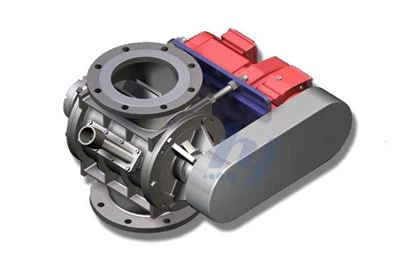
Rotary Airlock Valve for Powder If you’re in the market for Orifice Gate Valves and need expert advice on selecting the right valve for your application, don’t hesitate to reach out. Our team of experienced professionals is ready to assist you in finding the perfect valve solution to meet your needs.
References
- "Valve Handbook", Third Edition, by Robert W. Saunders
- "Mechanical Engineering Design", Eighth Edition, by Joseph E. Shigley, Charles R. Mischke, and Richard G. Budynas
- "Pipeline Rules of Thumb Handbook", Fifth Edition, by John B. Campbell
Shanghai Hanye Engineering Technology Co., Ltd.
As one of the most experienced orifice gate valve manufacturers and suppliers in China, we offer a wide range of products with superior quality. We warmly welcome you to buy customized orifice gate valve at competitive price from our factory. For more information, contact us now.
Address: Building 7, No. 428 Banqiao East Road, Shanyang Town, Jinshan District, Shanghai
E-mail: Windy@hanye-tech.com
WebSite: https://www.hanyeconveying.com/
